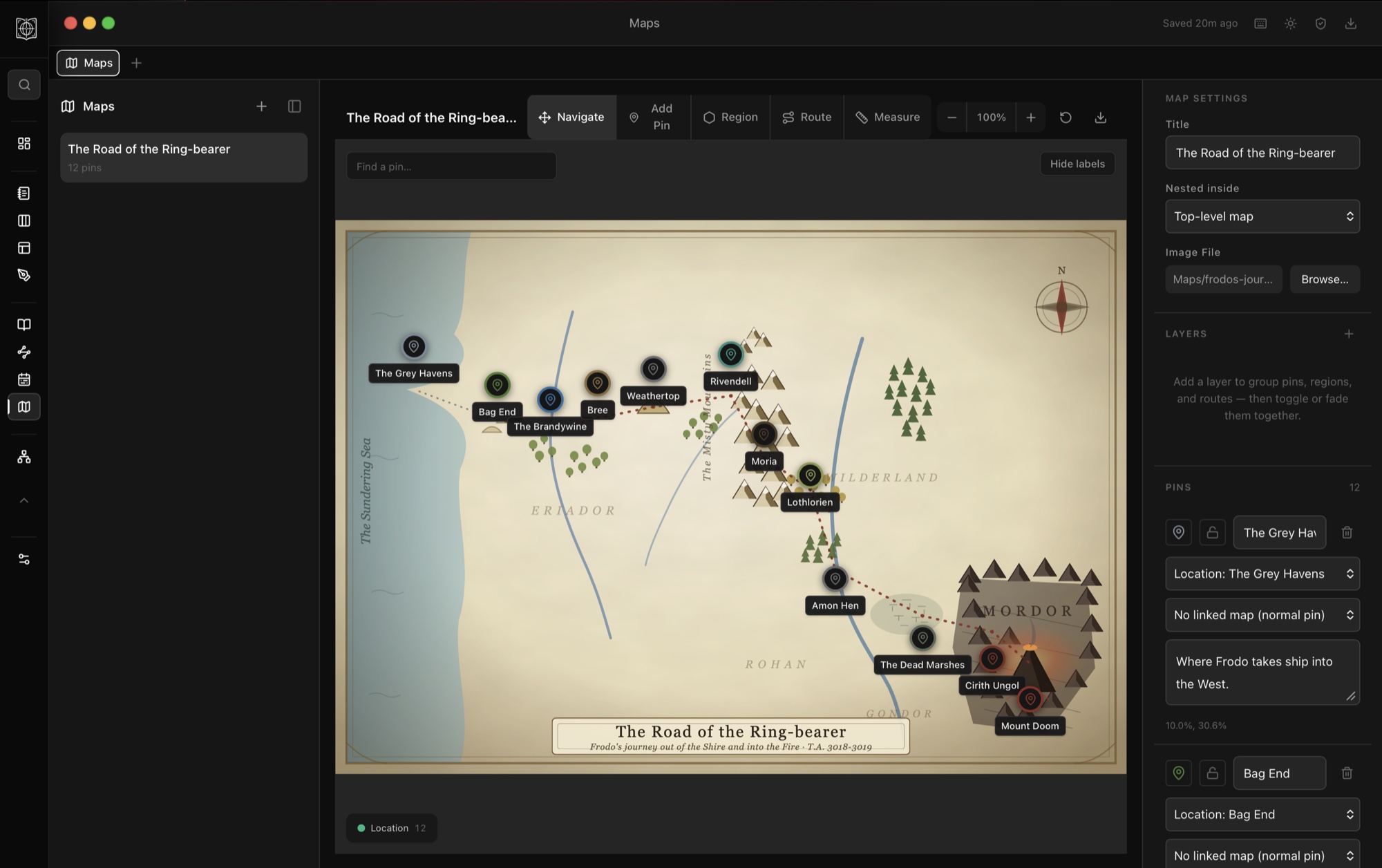
The prettiest map in the world is useless if it does not match the story or answer a question. Design the map the story needs first, make it readable, and then connect it to your world so it pulls its weight while you write.
1. Design from the story
List the places the plot actually needs: where it starts, where it ends, the obstacles between. Arrange them so the geography creates the journeys and barriers the story wants. A mountain range exists because someone has to cross it. The map serves the plot, not the other way around.
2. Get the geography roughly right
You do not need a degree, just enough realism that nothing jars. Rivers run downhill to the sea. Mountains shape weather and block travel. Cities grow where water, trade, and defense meet. A little plausibility buys a lot of trust.
3. Fix the scale and distances
Decide how long a journey between two key places should take, then set distances to match, and keep them consistent. Travel time is a plotting tool. When readers can feel the scale, the world holds together; when a week's ride happens in an afternoon, it breaks.
4. Draw it, at any skill level
Sketch by hand, use simple shapes, or use a dedicated map-art tool if you want polish. Readability beats artistry. Label the places that matter, keep a clean style, and stop before fussing over every tree.
5. Make it interactive
This is the step most guides skip. A static image cannot tell you who rules the city you just clicked. Bring your finished art into a tool that links the map to your world: in WorldFrame, drop a pin on a city and it opens that city's record, draw a region and tie it to a faction, nest a city map inside the continent, and draw a character's route across it. The map stops being decoration and becomes a working atlas of your world.
Common questions
How do I start?
From the story, not the coastline. List the places the plot needs and how they relate, then arrange them so distance and terrain create the journeys you want.
Do I need to be good at drawing?
No. Sketch by hand, use shapes, or a map-art tool. Readability and connection to your world matter more than polish.
How do I make it interactive?
Bring the art into a tool with pins and regions linked to records. In WorldFrame a pin opens a record, regions tie to factions, and you can nest maps and draw routes.
What scale should I use?
One that makes travel times match your story. Set distances to fit the journeys you need and keep them consistent.
Turn your map into an atlas.
Every pin opens the lore behind it, in plain files you own.